Part of a combined session, or on its own
Sound therapy for women singing bowls in Whaley Bridge, near Stockport
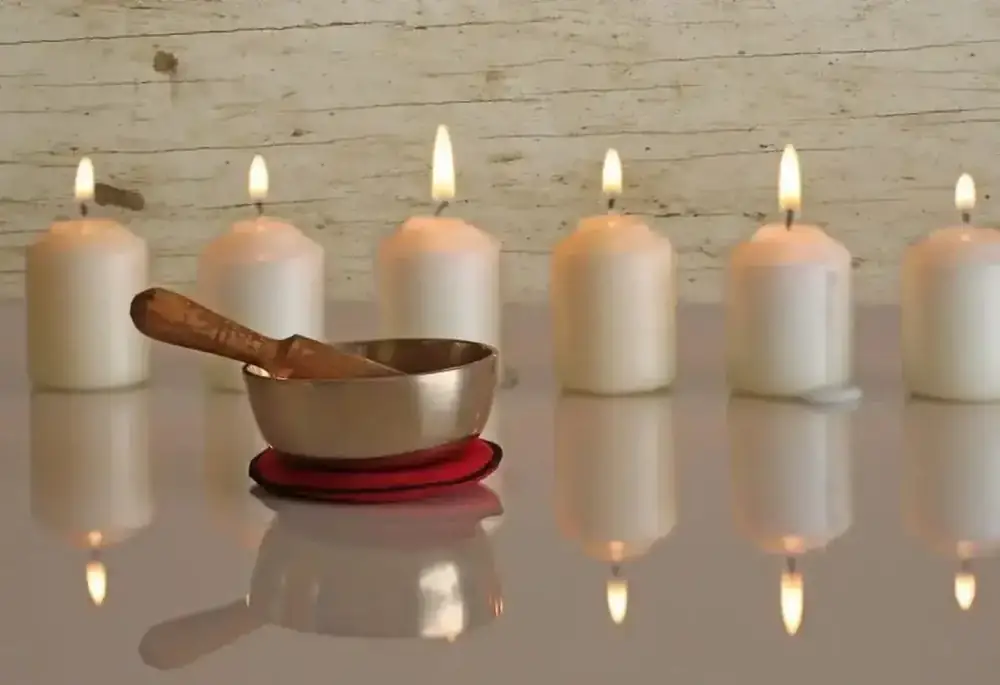
Singing bowls, humming and drum, offering a way into calm for those who find sitting still in silence more stressful than restful.
Part of a combined session, or on its own
Singing bowls, humming and drum, offering a way into calm for those who find sitting still in silence more stressful than restful.
Sound and voice therapy has been used consciously for thousands of years. Singing bowls, humming and drum work through tone and frequency, reaching the body in a way that feels less demanding than seated stillness, particularly for people whose minds won’t easily quiet down.
Sound is vibration. We hear it with our ears, but we also feel it through the whole body: the deep tones of a singing bowl can be felt in the chest, the belly and the bones, and a body made largely of water carries that vibration well. The long, steady tones and slowly pulsing overtones of the bowls give the nervous system something even and predictable to settle into. Our own rhythms tend to fall into step with a steady rhythm around us, so breathing slows, the heart rate eases, and brain activity shifts towards the slower patterns associated with deep rest.
Voice and humming work from the inside. Humming lengthens the out-breath, one of the most direct ways of switching on the calming, parasympathetic side of the nervous system, and its vibration resonates through the throat, chest and head, close to the vagus nerve, the body’s main pathway for rest and repair. Humming also greatly increases the nitric oxide released in the nose and sinuses, which supports the airways and circulation. Across cultures, people have soothed themselves and each other with lullabies, chanting and song for exactly this reason: the body recognises its own voice, felt from within, as a signal of safety.
It’s especially suited to those living an overloaded, always-on lifestyle, or feeling resigned, low, burned out or stressed.
Who this tends to help
Sound offers the nervous system a reset. When the body has been on alert for a long time, it forgets how to come down on its own; the tones of the bowls give it a clear, steady invitation to do so. Within minutes, most people notice their breathing slowing and deepening, their shoulders dropping and their jaw loosening, as the body shifts out of fight-or-flight and into rest and repair.
Unlike meditation, it asks nothing of you. The mind has something to rest on, so thoughts slow down without having to be pushed away, and the body eases off by itself. Many people drift into a state between waking and sleep, which is where some of the deepest settling happens.
Sound is often used to close a session, helping the nervous system integrate what has shifted during acupuncture or bodywork, or as the primary focus itself when what’s needed is deep, passive rest rather than more hands-on work. Humming and simple voice work can also be taken home as a way of calming yourself between visits.

Research summary
Singing bowl sound therapy has a small but encouraging evidence base. A randomised controlled trial found a single session produced a stronger relaxation response, measured through brainwave activity and heart rate variability, than progressive muscle relaxation or waiting alone, with a more pronounced drop in self-reported anxiety.
Most people find it deeply relaxing, sometimes drifting into a light sleep. You stay clothed and comfortable throughout, usually lying down.
Both. It can close a longer session after acupuncture or bodywork, or be the main focus when deep, passive rest is what’s needed most.
Book a session and we will meet what is here, together.
Book initial consultation See sessions & prices