Part of a combined session, or on its own
Cupping therapy for women in Whaley Bridge, near Stockport and the High Peak
Suction cups draw stagnant tension to the surface, improving blood and lymph flow far deeper than hands alone can reach.
Part of a combined session, or on its own
Suction cups draw stagnant tension to the surface, improving blood and lymph flow far deeper than hands alone can reach.
Cupping has been used for centuries, in cultures all over the world. Cups are placed on the skin and a vacuum is created, drawing the tissue beneath up into the cup to ease stagnation and improve blood and lymph flow. When a cup is slid across a larger area rather than left static, cupping massage works more like deep-tissue massage, invigorating muscle and connective tissue further than hands alone can reach.
Cups can be made from bamboo, ceramic, glass, silicone or plastic; in Europe, glass, silicone and plastic are the most common. With glass cups, the vacuum is created by briefly heating the air inside before placing the cup on the skin, known as fire cupping, which leaves a pleasant, warm sensation. Plastic cups use a small hand pump instead, and silicone cups create suction with a simple push and release, which lets me control exactly how much suction is used for the job at hand. A lighter version is also used on the face and neck, mainly to invigorate the skin and soften shadows under the eyes.
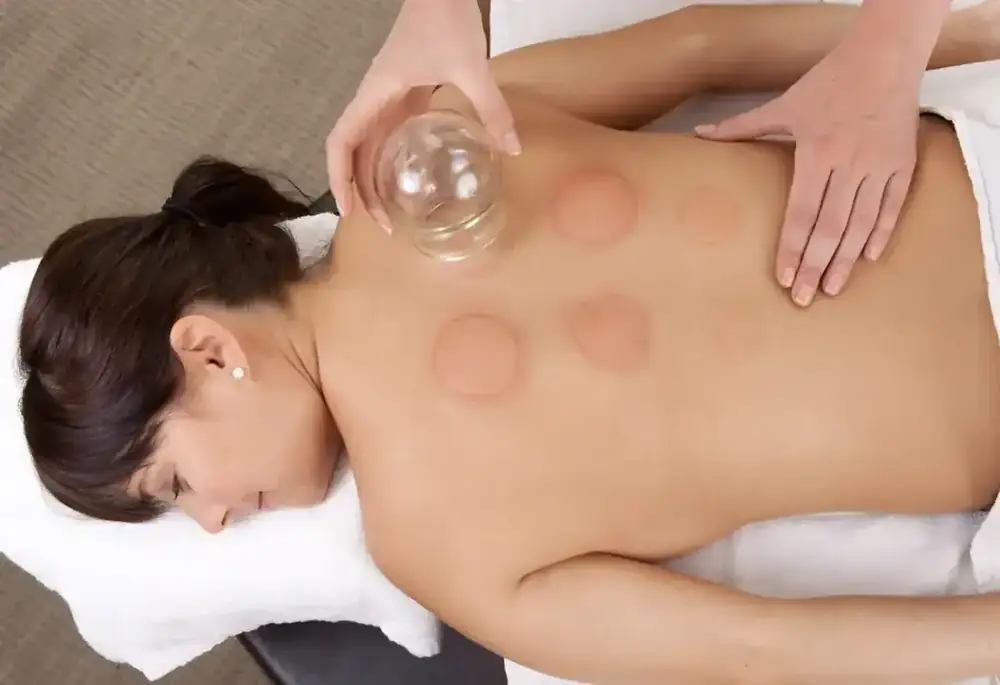
Depending on the strength used, the marks left afterwards can look like bruising. These aren’t dangerous, may be a little tender for the first day or two, and usually fade within three to ten days; a warm bath with Epsom salts can help the skin settle faster.
Cupping isn’t suitable for everyone. It’s avoided for anyone on blood-thinning medication, with a bleeding disorder or a pacemaker, and for anyone who is very weak, such as shortly after surgery or childbirth.
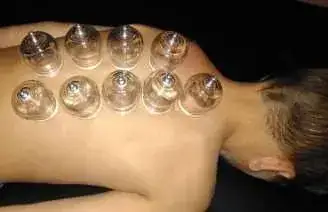
What cupping can help with
Most hands-on therapies work by pressing into the body. Cupping does the opposite: it lifts. The suction draws skin, fascia and the upper layers of muscle up into the cup, decompressing tissue that has been squeezed and held for a long time. That single difference explains much of what cupping can do that massage alone cannot.
It improves blood flow. As the tissue is lifted, the small blood vessels beneath it widen and fill. The pull on the vessel walls is thought to prompt the release of nitric oxide, the body’s own signal for relaxing blood vessels, so circulation to the area increases and stays raised for some time after the cups come off. Fresh blood brings oxygen and nutrients to tissue that has been starved of them, and helps carry away the metabolic by-products that build up in tight, overworked muscle. The marks cupping leaves come from tiny capillaries releasing a little blood under the skin; clearing it away draws a local repair response into the area.
It eases pain. The strong, unusual sensation of suction stimulates receptors in the skin and fascia, which compete with pain signals on their way to the spinal cord and turn the volume of pain down, much as rubbing a knock makes it hurt less. Studies measuring pressure-pain thresholds have found that tissue becomes less sensitive after cupping, and many people feel the relief immediately.
It releases the fascia. Lifting separates layers of connective tissue that have become stuck together, restoring the space and gliding between them. Sliding cupping, where the cup moves over oiled skin, is especially good at this, working along a whole line of tension rather than a single spot, and softening adhesions that limit movement.
It helps the muscles work properly again. Better blood supply, less guarding and freer fascia together mean a muscle can lengthen and contract as it should. Range of movement improves, stiffness eases, and recovery after strain or training is quicker, which is why cupping has become so popular with athletes.
It calms the nervous system. Although it looks intense, most people find cupping deeply relaxing. The body shifts from its stress response into rest and repair, and it is not unusual to feel pleasantly heavy and sleepy afterwards.
In practice, cupping is often used before acupuncture, to loosen tight tissue and improve circulation so needling can work more precisely. Occasionally it follows instead, easing anything the treatment has stirred up. Combined with acupuncture or gua sha, the effect tends to be more complete than either alone.
Research summary
Cupping has a reasonable and growing evidence base for musculoskeletal pain. Systematic reviews and meta-analyses report meaningful reductions in pain intensity for chronic back and neck pain, though researchers note the field still needs more standardised, high-quality trials.
Often, yes, similar in appearance to a bruise. They’re not usually painful and fade within about a week. The depth of the mark reflects how much tension was there, not how hard the treatment was.
Included. If your pattern calls for cupping, it’s simply part of the treatment, at no additional charge.
Not for everyone. It’s avoided for anyone on blood-thinning medication, with a bleeding disorder or a pacemaker, and for anyone who is very weak, such as shortly after surgery or childbirth. Let me know about any of these at your consultation so we can choose a suitable alternative.
Book a session and we will meet what is here, together.
Book initial consultation See sessions & prices