A modality we combine into your session
Herbs & Nutrition
Herbs and simple, realistic nutrition guidance that address imbalance at its root, working alongside your hands-on treatment rather than replacing it.
A modality we combine into your session
Herbs and simple, realistic nutrition guidance that address imbalance at its root, working alongside your hands-on treatment rather than replacing it.
The tongue tells us a great deal about the state of your gut microbiome — its colour, coating, shape and moisture all reflect what’s happening beneath the surface. Read alongside your pulse, your day-to-day signs and symptoms, and how your digestion, urine and stool actually behave, it builds a clear picture of where things are out of balance.
From there, we give you practical, realistic guidelines on how to eat to bring your microbiome back into balance — not a generic diet sheet, but guidance shaped to what your body is showing us.
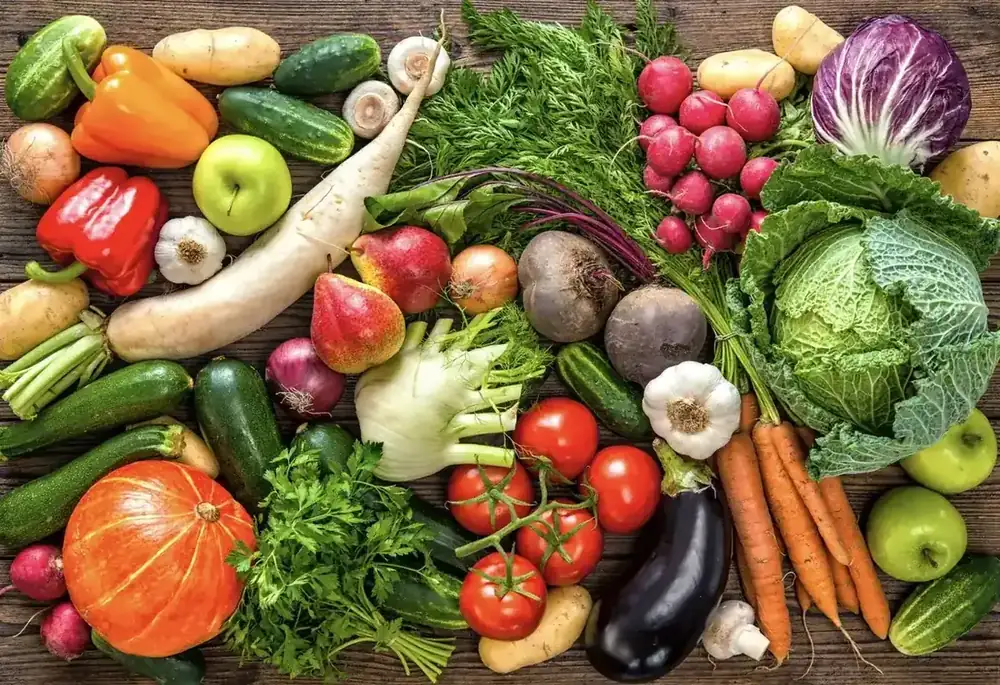
Chinese medicine organises food around five flavours, each linked to specific effects on the body, and around energetics — whether a food is warming or cooling in its action. Balancing flavour and energetics together supports digestion and absorption, so the food you’re already eating can actually nourish you.
Who this tends to help
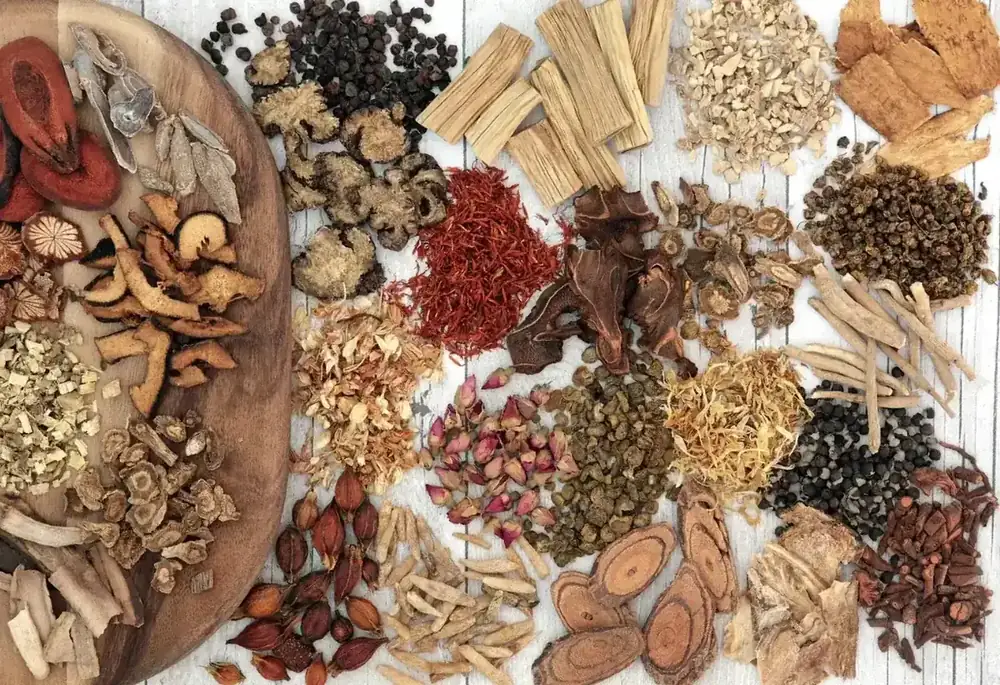
Chinese herbal medicine works to modulate and support how the internal organs function, correcting imbalances rather than simply masking symptoms. Herbs are used alongside nutrition and lifestyle guidance for a wide range of patterns, including digestive issues, chronic fatigue, weak immunity, fertility concerns, and pain.
Herbs act to reduce inflammation, improve circulation, ease pain, calm allergies and immune over-reactivity, and support the body through fatigue or migraines. Because they work internally and cumulatively, they’re often used alongside acupuncture and bodywork when a pattern needs more specific, sustained support than hands-on treatment alone can give.
A herbal consultation involves a detailed history, tongue and pulse assessment, and usually a course of herbal extract taken daily, reviewed and adjusted every couple of weeks.
Some herbs can interact with medication, particularly blood thinners, so I always take a full list of what you’re currently taking, prescribed or over-the-counter, before prescribing anything, to make sure there are no unwanted influences.
Working with me
I am a fully qualified and insured Chinese Medicine Herbalist.
Your first consultation will take up to 45 minutes (or 30 minutes for an online consultation). You’ll be asked questions and I will listen to you carefully. We’ll go through the consultation form together.
The questions will relate to how the problem started, your signs and symptoms, your lifestyle and diet, and your general health. Your medications and allergies will be noted as well.
I will inspect your tongue and ears, and check your pulse in multiple positions on the wrists. If you agree, I will take photos of the tongue and ears.
Where relevant, your diet and your state of stress will be discussed, so we can plan how you can support yourself through the process of healing.
At the end of the consultation, I will explain what I think has happened to bring disharmony to your health.
After about two weeks, you’ll have a 30-minute follow-up consultation to discuss your progress and adjust the herbs if needed.
The herbs will need to be taken daily, initially for two weeks. We make an evaluation at around the two-week mark, and I decide how to update the herbal approach.
Things usually improve within the first week, and depending on how your body responds, I may reduce some of the herbs, add new ones, or prescribe a different formula altogether.
A course of treatment, depending on the issue, will usually take 1–3 months. Some cases resolve within 2–4 weeks, while others need up to 6 months — it depends on the severity of the problem, how long it has been affecting you, how many organs are involved, and so on.
Herbs offer a safe and effective therapy, used to support the body’s own processes in easing pain or encouraging healing. The daily dosage of raw herbs is typically 50g to 120g, because that quantity is what gives them a genuine therapeutic effect.
A regular tea bag weighs around 1.5–2g, so the daily amount of herbs for a decoction is roughly equivalent to 32 to 80 tea bags — just to give you a sense of scale.
Raw herbs need to be cooked for at least 30 minutes, and preparing and drinking such an infusion three times a day is a lot to ask of a busy, moving life. For convenience, I offer herbal extracts instead, where each gram of extract is equivalent to 7–9g of raw herbs.
These extracts are produced in a highly controlled pharmaceutical process by SunTen Pharmaceuticals, a company that has been supplying herbs to the UK for 50 years.
The extract is soluble in water, so it’s easy to take. The downside is that these infusions aren’t always tasty — though my five-year-old patients manage to drink them, so I’m confident anybody can, if they’re willing to.
If you’d prefer to work with raw herbs and cook your own decoction, this can be arranged. The powdered extract can also be prepared into capsules, for anyone who’d rather not taste it or mix it with water.
The response to treatment varies, though progress is often felt within the first week. It usually takes 1–3 months to resolve an issue, but it may take longer, such as 6 months.
This holistic approach treats the whole person, and most people find unexpected benefits beyond their original reason for seeking treatment — better sleep, improved mental clarity, more energy, inner balance, and a general sense of well-being.
Research summary
Evidence for Chinese herbal medicine varies considerably by condition and formula, and is generally less standardised than research into acupuncture or physical modalities. Where used, herbs are chosen individually for your pattern, discussed openly, and reviewed regularly so we can track what’s actually helping.
The herbal formulas used in clinic are drawn from and cross-checked against standard professional references, not folk tradition alone. A few of the core texts:
Materia medica & pharmacology
Formulas & clinical research
Research-focused & integrative titles
Many people notice change within the first week, though a full course is usually 1-3 months, reviewed and adjusted roughly every two weeks.
They usually come as a soluble extract that mixes easily into water. The taste isn’t always pleasant, but it’s manageable, even for young patients. If you’d rather cook a traditional decoction, raw herbs can be ordered and I’ll talk you through preparation and dosing, or the powdered extract can be prepared into capsules if you’d rather not taste it.
Some herbs can interact with medication, particularly blood thinners, so I take a full medication history and check for interactions as a matter of course. Please tell me about anything you’re taking, prescribed or over-the-counter. Prescribed by a qualified herbalist, herbs are generally very safe; occasionally there’s mild digestive upset in the first week or two, and the formula is adjusted if that happens.
Book a session and we will meet what is here, together.
Book initial consultation See sessions & prices